


In conversations with CEOs, CFOs, and finance teams, we’re hearing the same question more and more often these days:
“How can we effectively integrate AI into our business processes in the future?”
The fascinating insight:
Often, it’s not even about AI at first.
It’s about the systems behind it.
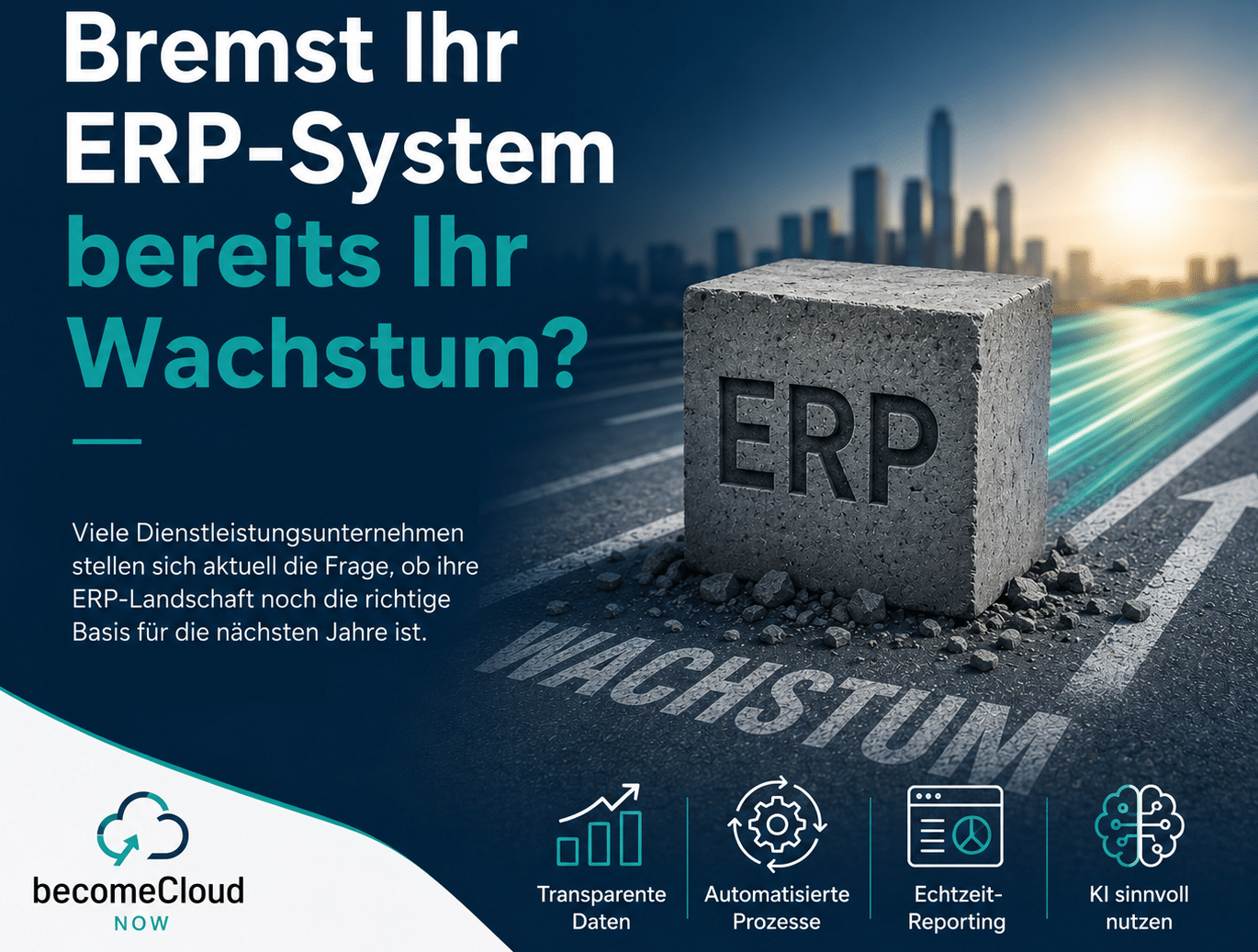
Many companies still work with ERP landscapes that have grown over the years. The processes work, the employees know the system—but new requirements can only be implemented with considerable effort. This becomes particularly apparent when it comes to AI.
Anyone who wants to automate, improve forecasts, or access company data more quickly needs a platform designed for that purpose.
That is why many companies are currently grappling with the question of whether their existing ERP solution is still the right foundation for the coming years.
From our perspective, this is a strategic decision. Not because AI is a short-term trend. But because modern ERP systems are increasingly laying the groundwork for leveraging innovation in the first place.
So perhaps the most interesting question is not:
“Which AI should we use?”
But rather:
“Is our IT infrastructure already set up for this?”
If you’d like to learn more about how AI is shaping companies’ ERP strategies, please feel free to contact us!
